
What happens when we die? This question has spawned a myriad of religious beliefs, rituals and mysticism, yet all evidence suggests we’ll become a deceased body of no use. All living things die with little reason for their existence; animals, plants, bacteria. Why would humans be treated any differently?
No, this isn’t the chirpy start I wanted either. However, I’m here to consider our options. I’ve been playing Cyberpunk 2077 and 13 Sentinels: Aegis Rim, two sci-fi games which play with the idea of downloading consciousness into other things to exceed mortal existence. Typical science fiction nonsense, you might say. Transfer my mind? I can’t even send a JPEG!
Valid arguments, yet this already feels like a natural extension of modern technology. The haunting trail left behind by social media accounts, the holograms we’ve used to replicate Michael Jackson and Tupac Shakur. The latter might be ghoulish in 2021, but society has a weird way of enveloping initially niche ideas into the mainstream. Remember when online dating was considered an abnormality? Or when, at the turn of the century, the internet went from fun distraction to an essential component of modern life?
The world has advanced so fast within 20 years, the continued existence of loved ones through microchips doesn’t feel so far away. Another option you register for, like donating your organs. The ethical discussions will be a nightmare, yet I’m fascinated by the idea of sticking a copy of myself on a USB. What will this mean for future historians? Detectives when trying to solve murders? Or the process of grief?
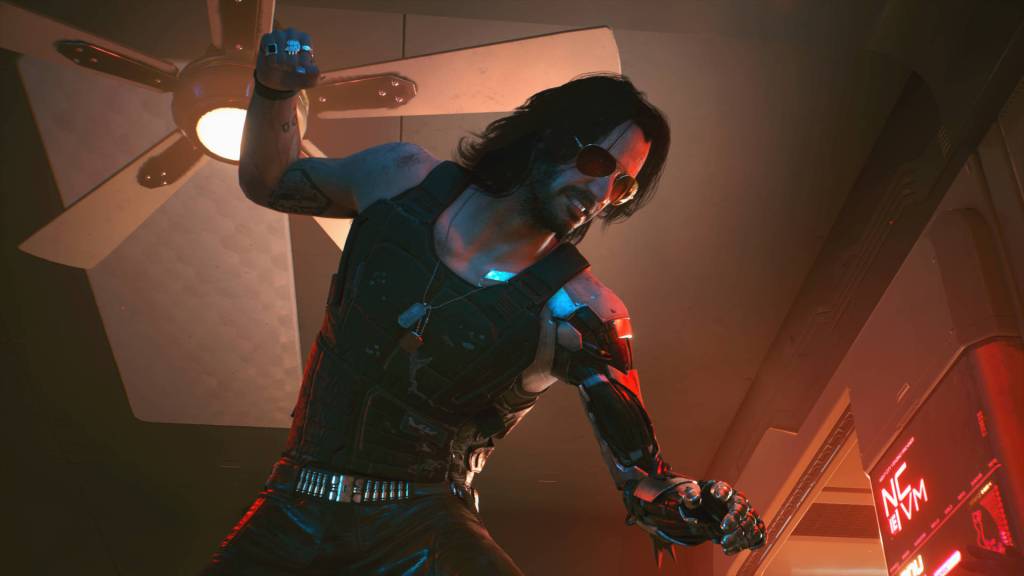
In Cyberpunk 2077, it means you share the same brain as Keanu Reeves. He plays Johnny Silverhand, a rockstar terrorist who is gradually overwriting the mind occupied by protagonist, V. The ability to download your mind into robotics is commonplace, although the technology is owned by corporations you perhaps don’t want to trust, or give power to, when it comes to preserving dignity of loved ones. Imagine Mark Zuckerberg owning the keys to your dead nan, for example.
Minus the gradual decline of my own, I’ve wondered if I’d like to share my brain with someone else. Those people who quietly talk to themselves when they’re in isolation, or people who feel lonely, would they benefit from surgically implanted Keanu Reeves? An artificial embodiment of someone who can give pep talks or advice who can’t be seen by anyone else. It almost sounds like a fashionable gift — like paying for a celebrity message on Cameo, only on a permanent loop and injected into the cerebral cortex.
13 Sentinels: Aegis Rim has similar themes but throws time travel into the mix. What if, after you die, you could download your consciousness into a robot and beam back in time to affect your past decisions? The future depicted in 13 Sentinels is ridiculous in some respects, centred around Kaiju destroying cities defended by naked teenagers in mechs, yet there’s some plausibility in its ideas; the ability to download or store our personality for a future generation, which could influence the course of human history if taken off the shelf.
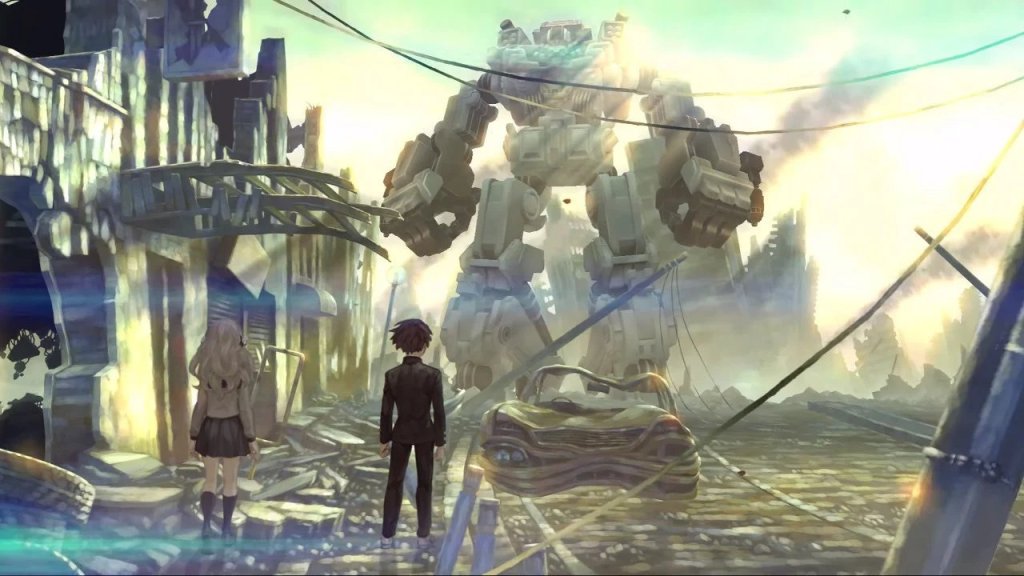
To some degree, books, videos and other archived sources already subtly do this. The chance to download an entire personality, however, could have a more direct and impactful effect. Imagine a person’s view and perspective from the past directly feeding the present, skimming radical ideals across human history like a pebble across water. It’s haunting to think about, especially in the context of the human need to recapture the ‘good old days’ as we age into obscurity. An echo chamber where we regurgitate the ideas we want to hear from history. Sound familiar?
The future of death is concerning and irresistible. In the social media age, where the scramble for attention is constant, the chance to download our existence for future use seems like an idea primed for tyrannical influencers hooked on metrics. If the modern world has proven anything though, the ridiculous and unthinkable could soon be on our very doorstep.







 StarkTreatment